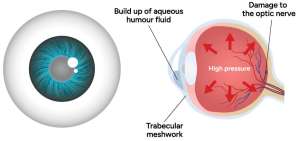

Glaucoma
What is Glaucoma?
A transparent fluid circulating inside the eye provides your eye with needed nourishment. The fluid is constantly circulated through the eye’s drainage channel, or angle, into the bloodstream and back into the eye.
Glaucoma occurs when this fluid is not able to pass through the drainage channel, causing pressure to build inside the eye. Permanent vision loss can occur if the extra pressure is not alleviated and starts to push against the optic nerve linking the eye to the brain.
Anyone can suffer from glaucoma. However, individuals with relatives who have glaucoma, those with diabetes, adults over 35 years old, extremely nearsighted individuals and individuals of African descent have an increased risk of developing the condition.
Open Angle Glaucoma VS. Narrow Angle Glaucoma
Ninety percent of people with glaucoma have open-angle glaucoma. With open-angle glaucoma, the drainage channel has been damaged, leading to fluid accumulation in the eye.
Narrow-angle, or closed-angle, glaucoma is extremely rare. In contrast to open-angle glaucoma, which is characterized by a damaged drainage channel, narrow-angle glaucoma occurs when something blocks or covers the eye’s drainage channel. Typically, the iris is pushed against the lens, obstructing the drainage angle. Narrow-angle glaucoma can be dangerous because the eye pressure increases at an extremely fast rate.
Narrow-angle glaucoma can be caused by a variety of factors, including an inherent eye abnormality, eye trauma, some medications and anything causing pupil dilation (e.g., dim lighting, dilating eye drops). The condition can also develop as the result of irregular blood vessels forming over the drainage angle as a consequence of diabetes.